
Green electricity and
biomethane from biogas
Electricity generation from renewable sources. Full transparency of reporting under NEURC requirements. Stable, uninterrupted generation 24/7.
 Source reports
 About the company
Energy from the by-products
of our own farming
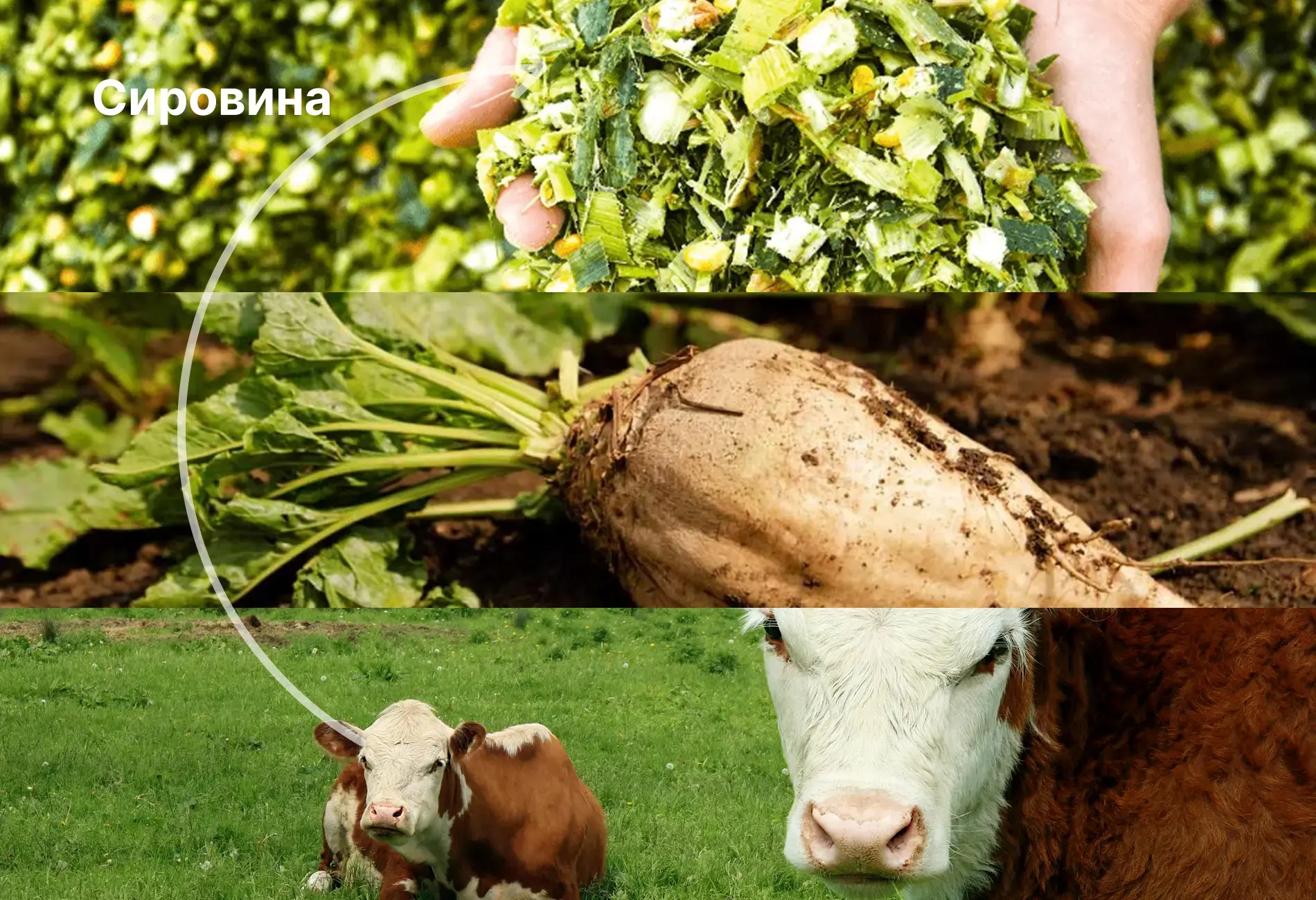
The feedstock for biogas and biomethane is the organic residue of our own farming — by-products of crop and livestock production. The company closes the loop: what is left after farming is turned into energy.

Licensed operations
NEURC licensee for electricity generation, in full compliance with the licence conditions (Res. No. 1467).

Farm feedstock
Organic residues from our own farming operations are the feedstock for energy production.

Transparent reporting
Monthly, quarterly and annual reports under NEURC Resolution No. 642.

Circular economy
Digestate — a by-product of generation — goes back to the fields as fertiliser, closing the loop.
Energy from solar radiation and biogas covers the company’s own needs and is fed into Ukraine’s power system. This makes us energy-surplus, reduces dependence on conventional sources and supports energy independence.
We were the first in Ukraine to start producing biomethane. After the full-scale invasion began we completed the plants, doubling capacity.

Biogas
Biogas plants turn organic matter into electricity and heat, powering our own farms and feeding energy into the grid while reducing the impact on the environment.

Biomethane
A gas equivalent to natural gas but renewable in origin. Using biomethane for heating, industry and transport cuts harmful emissions.
 NEURC reporting
Share of energy sources
disclosure
Under NEURC Resolution No. 642 of 26.04.2019, Section II, cl. 2.1 — published monthly, quarterly (cumulative) and annually.
 Request a report
| № | Energy source (Annex 1) | Jan | Feb | Mar | Apr | May | Total |
|---|---|---|---|---|---|---|---|
| 1 | Total electricity generated, incl.: | 100% | 100% | 100% | 100% | 100% | 100% |
| 1.1–1.6 | Nuclear, coal, gas, fuel oil, industrial gas, biomass | — | — | — | — | — | — |
| 1.7 | Biogas | ||||||
| 1.8–1.12 | Solar, wind, geothermal, hydro, other | — | — | — | — | — | — |
Electricity generation mix, 2025
- Biogas (cl. 1.7, Annex 1)100%
- Other sources0%
In line with Annex 1 to NEURC Procedure No. 642 of 26.04.2019
 The monthly report archive is updated as required by NEURC Resolution No. 642, Section II, cl. 2.1: monthly, quarterly (cumulative) and annually. For reports in Excel format, please write to the company e-mail.
 | Indicator | Q1 | Q1–Q2 | Q1–Q3 | Q1–Q4 (year) |
|---|---|---|---|---|
| Total electricity generated | 100% | 100% | 100% | 100% |
| Biogas |
| Energy source | 2022 | 2023 | 2024 | 2025 |
|---|---|---|---|---|
| Biogas | ||||
| Other sources | — | — | — | — |
 Annual data for the previous calendar year is published by 1 February under NEURC Resolution No. 2626 of 27.12.2023, cl. 3.2.
  Environmental impact
Environmental reporting
Under NEURC Resolution No. 642, Section VI, cl. 6.1 and 6.3 — the information is published no later than the 20th business day after the end of the calendar month. The annual report is due by 1 February (Res. No. 2626).

Air emissions
Monthly monitoring of pollutant emissions to air — in tonnes and g/kWh (Annex 4, lines 1.1–1.27).

Discharges into water bodies
Recording and publication of pollutant discharges into water bodies under the Annex 4 form (lines 2.1–2.10).

Production waste
Control and reporting of waste generated while producing electricity and biomethane (Annex 4, section 3).
 Legal framework
Regulatory documents
Licence conditions for electricity generation
 Licence conditions for electricity generation
NEURC Resolution No. 1467 of 27.12.2017, Chapter 2, cl. 2.2 — requirements for a licensee’s website and means of communication.
View
Procedure for disclosing energy sources
NEURC Resolution No. 642 of 26.04.2019, Sections II and VI — share of sources and environmental impact.
ViewAnnual environmental report
NEURC Resolution No. 2626 of 27.12.2023, cl. 3.2 — publication by 1 February for the previous year.
ViewInside information (REMIT)
 Inside information (REMIT)
NEURC Resolution No. 614 of 27.03.2024 and Res. No. 349 of 26.03.2022 (martial-law conditions). Disclosure runs through NEURC platforms only, not this website.
NEURCTariff hearings
NEURC Resolution No. 866 — publication of notices of open hearings and tariff justifications (where applicable).
ViewCertificates


 Sustainability
Circular economy
and responsible production
Sustainability means producing agricultural output while preserving resources for future generations. The company applies sustainable practices through a circular-economy model: efficient use and re-use of resources, less waste and better-optimised production.
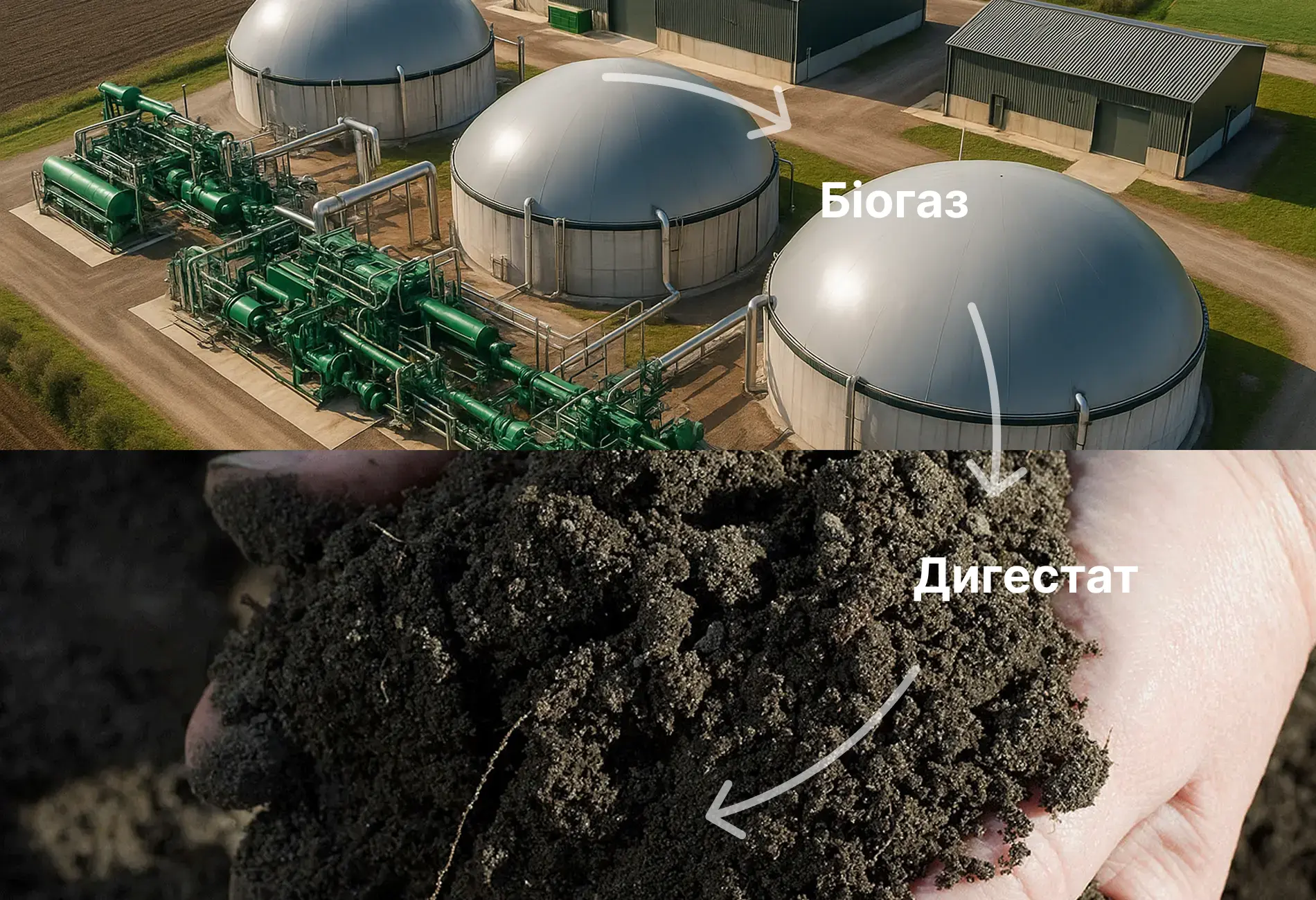
A full cycle for farm residues: organic matter becomes biogas, biogas produces energy, and the by-product — digestate — is used as fertiliser. Valuable nutrients return to the soil.

Renewable energy
We produce electricity, biogas and biomethane from the organic residues of farming. The digestate returns to the fields as a valuable fertiliser.

Responsible farming
We use digestate to enrich the soil: it raises fertility, cuts the need for mineral fertilisers and lowers greenhouse-gas emissions.

Energy surplus
We produce more energy than we consume. That creates added value and jobs, and supports the region’s infrastructure.

Social responsibility
We provide comfortable and safe working conditions, and pay land-share rent on time, keeping cooperation with local communities stable.
We put the UN Sustainable Development Goals
into everyday practice:


 Careers
Join
our team
We are building an energy-independent company and investing in the people who make it possible. We are looking for engineers, process specialists and maintenance technicians for our biogas and biomethane plants.
 Send your CV
Benefits package
Safe working conditions and a stable salary

Training
Professional development and upskilling

Team
A friendly team and support from management

A green mission
Work that contributes to Ukraine’s energy independence
 Get in touch
Contact information
Under the NEURC Licence Conditions (Resolution No. 1467 of 27.12.2017, Chapter 2, cl. 2.2) the company maintains public means of communication.
[Region], Ukraine, [postcode]


Write to us
 Write to us
Fill in the form — we will reply within one business day
 Photo gallery
Our production


